An altered starting condition
Replacing the missing thymic signal
An animal without a thymus poses a very particular question about communication between organs.
After thymus removal
In thymectomized mice and rats, a gene-therapy experiment restored sustained, supraphysiological circulating thymulin. Thymectomized means that the thymus had been removed. The researchers used an adenoviral vector expressing a synthetic thymulin analogue, delivered by an intramuscular injection.
Two features stop me rushing past this result. The source organ was absent, and the resulting circulating activity was above the physiological level. Those conditions are central to the experiment's interest. The result shows a way of sustaining the signal under that altered starting condition.
I want restoration to arrive with its object: what has been restored? Circulating activity is a measurable answer; the consequences for endocrine function require further observations.
Born without a thymus
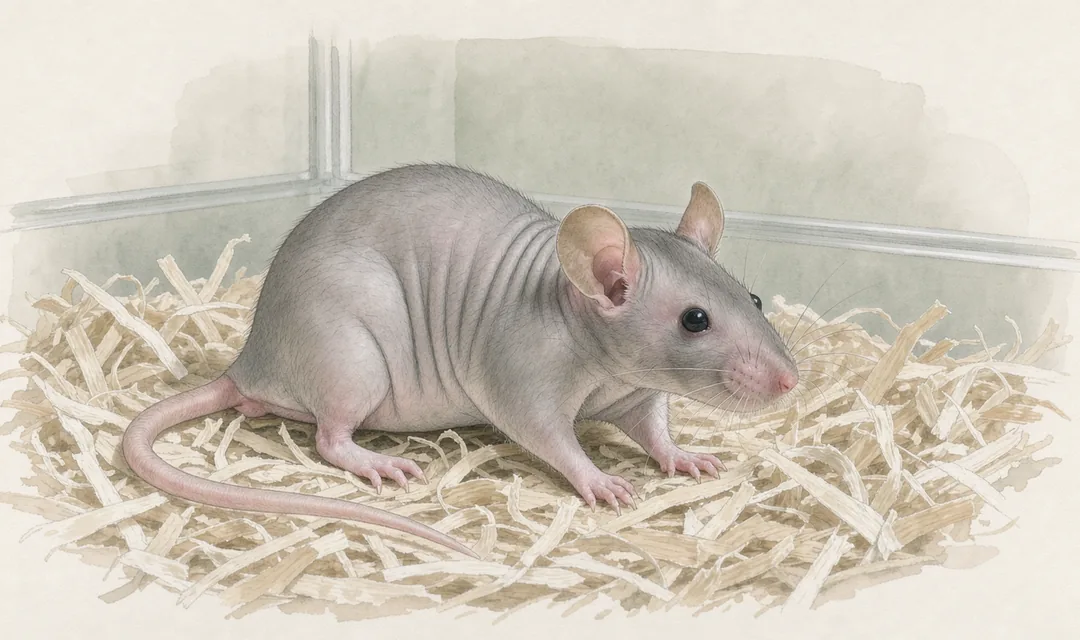
The neonatal study in congenitally athymic female mice used an adenoviral vector expressing the synthetic analogue. It reported prevention of deficits in circulating LH and FSH, the gonadotropins measured in this work, and prevention of ovarian dysgenesis. This was an intervention during development in animals born without a thymus.
For the organising question of this site, that is an arresting result: changing a thymic signal affected a reproductive-development problem in this model. I think the unusual animals are essential to understanding it. The missing organ gives the experiment a clear disturbance to investigate.
The reproductive result is why this connection feels consequential to me. Loose talk about balancing hormones seems especially unsatisfying beside such a particular experiment.
The separate human question
There is also a human clinical record. Two double-blind, placebo-controlled rheumatoid arthritis trials evaluated nonathymulin, a synthetic thymulin analogue. Their subject was disease activity in people with rheumatoid arthritis.
I would not recruit those trials into an argument about endocrine development. Their intervention and question deserve their own account. Likewise, the gene-therapy findings above concern an encoded synthetic analogue in animals with an absent thymus.
For the endocrine connection, the next convincing work would explain which responses belong to the starting deficiency, which depend on the intervention, and how those responses change in an intact system. A future experiment that distinguished those responses would be worth the wait.